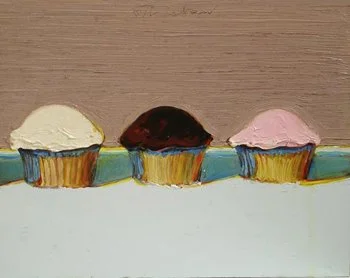
LET US EAT CAKE
AN INTRODUCTION TO MY FORTHCOMING BOOK “EATING PAINT”
Some people eat the icing around the edges of the cake first. That’s cool... Everyone should eat how they want. But if the cake is really well made, then eating the cake should be pleasurable too. I’ll probably have to self-publish this book. Everything that follows isn’t meant for the icing eaters.
Art is so much more than who made it, for whom, when, and why. That’s all icing. Art is the thing on the wall you remember months and years later... the experience that, in some small way, affected your existence as a human. Art is the cake. And there’s cake for everybody. The history, the theory, the cultural context, even the identity of the artist. Those are secondary reads. Icing goes on the cake.
When you encounter a painting that doesn’t move you, that’s not your fault; it’s just not your taste. Maybe you don’t even like cake (or art). Great! That doesn’t make you uneducated or uncultured. And just because it’s in a museum doesn’t mean it’s good. I mean hell, most American museums have a Renoir in them, and that dude is at best a sheet cake from Wal-Mart. He’s just there because he was fashionable when the gatekeepers had cash and ‘taste’ but not much imagination. Yeah, I said it. Disagree? You’re right too.
I’m here to defend cake... to help you step back into museums and galleries with a fresh outlook. To get there, we’re taking the back door through the kitchen.
Food, due to its daily and biological necessity, has evaded unnecessary intellectualism. Sure, there have been fads like molecular gastronomy or foraged food... but those are little foodie clans in the larger, everyday world of food. We all eat. And we eat what we like. We have opinions about new foods we try. We have proclivities about food that are unique to each of us. Why, then, don’t we extend these opinions to another vital, life-giving creation: art? Let us eat and look and feel the things we feel. It is our deep, inalienable right.
This project is meant as a re-entry point, not a rejection. A reminder that art existed before wall text, before critical consensus, before market valuation. A reminder that a painting's first job is to move us. Everything else... and most of what is written on art... only matters because of what happens in that first silent exchange between the viewer and the work.
If I take you to an award-winning Szechuan restaurant and you don’t enjoy the beef tongue in chili oil, I would understand. Its texture was off-putting... or the spice exceeded your tolerance. That’s you. That’s good.
Now, if I take you to the Metropolitan Museum of Art and we look at Van Gogh’s Irises, you might have a similar experience. But I bet you won’t express your opinion as freely. There would be some sort of internal conflict if you didn’t like something you’ve been told is Good (with a capital G).
We know a lot about Van Gogh: his struggles, his tragic life. I’ll grant you, it’s an interesting story. Easy to romanticize. You probably think it helps you engage with the art in some small, meaningful way. But what if you just don’t like Irises the same way you don’t like beef tongue? Fine! What a genuine reaction. Can you explain why?
This book aims to help you do exactly that... to give language to your raw experience of art using the emotional instincts you already have from food: texture, acidity, umami, sweetness, spice, mouthfeel. These are all readily available feelings to be repurposed into descriptors for what it’s like to stand in front of a painting. You already know how to feel. This book will help you name it. No context. Just you and the painting.
I’m not saying we can’t lick a little icing. Full confession: I lick the icing first. Context is actually a very enjoyable enrichment to the act of experiencing art. Once we encounter something we like, it’s natural to want to know more... about the world the art came from, or the type of person who made it.
This book isn’t an argument against history, theory, or context. It’s an argument for experiential sequence. Before we learn a painting's story, we should have the chance to taste it, to embrace it for what it does to us directly, without instruction. Or reject it outright without needing to be told why it matters.
Context is not the enemy. It’s the reward.
If you get really into Szechuan food, and maybe even try cooking it, you might start ordering fifteen different chili varieties and developing your palate for fine distinctions in spice and texture. Or reading the history of China and ethno-regional developments in dietary preferences. That’s exactly what appreciation should be. But I’m a reformed icing-licker, and I’m here to show you the way. Feelings first. Context later. You don’t need a developed palate to enjoy flavor.
In writing this book, I had to curate, if you will, a collection of artists to demonstrate the experiment. You’ll notice a lack of sculptors... or other types of visual artists altogether. I chose to limit the range. Not because other voices aren’t worth hearing, but because this book had to hold together. The artists here are the ones most tightly woven into the emotional language of Western painting... and a few of my personal favorites. They’re the heavyweights we have to wrestle with first because the icing lickers put them there.
The cool thing is: if this experiment works, and I think it will, you’ll be ready to tackle artists unknown to you. This way of looking can extend to any visual art, maybe even non-visual arts. Or, if you like it enough, maybe we do another 300 pages. (A girl can dream.)
Arranged like a cookbook and decidedly not an art history book, each unique recipe has been created to pair with a selected artist. Each accompanying essay is an attempt to replicate the emotional experience of encountering the art, using the language of the dish. In cases where the artist receives less than a glowing review, the recipe has been revised appropriately.
In cooking and eating the recipe of your choice, the hope is you’ll be able to name the feelings the art evokes. With enough experience, you’ll be ready to head off to the museum, willfully ignoring the wall text (at least at first), consuming with relish the things you love, and walking past what leaves your palate unmoved.
My hope is that, in working through this book, I can demonstrate the having of strong opinions and provoke some of yours. You can assume I probably know more than you. But we get to play the same game. We’re on equal footing. I want you to disagree with me. I’m not hiding behind academia or context. I’m bearing the deepest parts of my art-loving soul in the hope that you’ll have the courage to bear yours beside me.
Let’s eat what we want. Look at what we love. And feel it all.
Feeling is the only thing an artist worth their salt is hoping for.
This is how we consume art... cake, icing, and all.